
Our Courses:
Small Animal Hydrotherapy
Canine Remedial Massage
Animal Dry Needling
Hands-on Training at Melbourne Animal Physiotherapy
Join us for an immersive learning experience at Melbourne Animal Physiotherapy, one of Australia’s leading animal rehabilitation clinics.
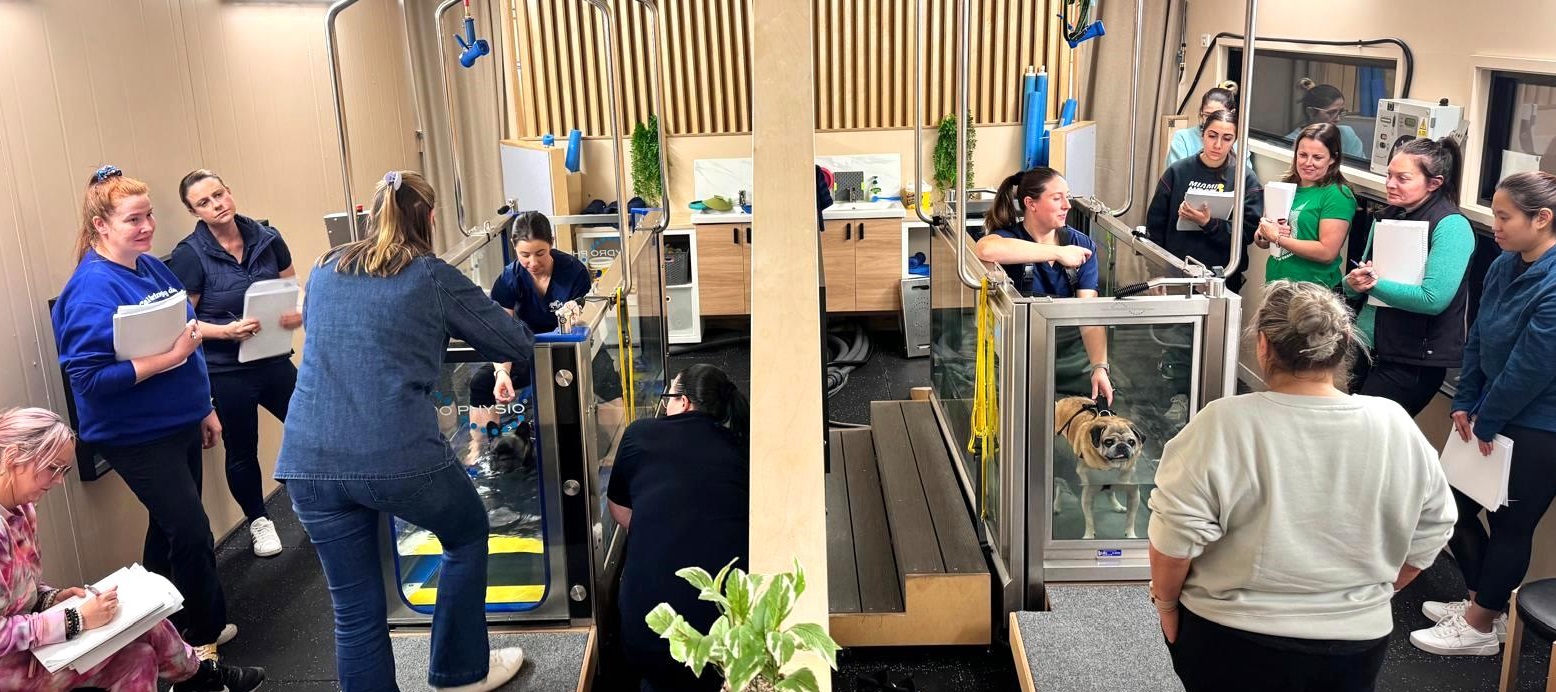
Our small-group, face-to-face courses (maximum 10-12 participants) are designed to give you real-world experience in canine rehabilitation, hydrotherapy, dry needling and massage techniques. Held in our beautifully renovated clinic in Kensington, just 5 minutes from Melbourne CBD, these courses provide a rare opportunity to learn directly from experienced animal physiotherapists while working with real canine patients.
Whether you are looking to start a new career path or expand your professional skills, these courses provide practical knowledge, confidence, and hands-on experience in the rapidly growing field of animal rehabilitation.
Please reach out to info@map.physio to book a discovery call to learn more about our courses.
Book Small Animal Hydrotherapy
Book Canine Remedial Massage
Book Animal Dry Needling
Small Animal Hydrotherapy Course
Hydrotherapy is one of the fastest-growing areas in animal rehabilitation, and the demand for skilled therapists continues to increase.
Our two-day intensive hydrotherapy course provides a unique opportunity to learn the science and practical skills required to work safely and effectively with canine patients in a hydrotherapy setting.
You will gain hands-on experience using two HydroPhysio underwater treadmills, assist with live clinical cases, and learn how to design effective hydrotherapy programs under the guidance of experienced therapists.
Best of all, the course is completed over one weekend, making it easy to fit into busy schedules.
What Makes This Course Unique
🐾 Small group learning (max 12 participants)
🐾 Hands-on experience with real canine patients
🐾 Training in a fully operational rehabilitation clinic
🐾 Access to two HydroPhysio underwater treadmills
🐾 Expert instruction from experienced animal physiotherapists
🐾 Practical case-based learning
Meet Your Instructor
Lauren Elliott graduated with Honours in Physiotherapy from the University of Melbourne in 2001 and completed her Master’s in Animal Studies in 2007 through the University of Queensland.
Lauren founded Melbourne Animal Physiotherapy to combine her passion for physiotherapy with her love for animals. With more than two decades of clinical experience, she has built one of Australia’s most respected animal rehabilitation practices.
Her vision is to provide exceptional care for small animals while developing a team of highly skilled, compassionate therapists.
Lauren is joined by experienced MAP hydrotherapists, ensuring participants receive extensive hands-on mentoring throughout the course.
Course Modules
Participants will gain both theoretical knowledge and practical skills across a range of key topics, including:
Canine Anatomy
-
Anatomy terminology and directional terms
-
Skeletal structure and body systems
-
Understanding tissues and organs relevant to therapy
Canine Arthrology
-
Types of joints
-
Major joints involved in canine movement
-
Application to rehabilitation and hydrotherapy
Canine Nervous System
-
Overview of the canine nervous system
-
Implications for neurological rehabilitation
Muscular Anatomy
-
Major muscle groups involved in locomotion
-
How muscles influence movement and therapy
Orthopaedic Conditions
-
Common orthopaedic injuries seen in practice
-
Rehabilitation approaches for these conditions
Neurological Conditions
-
Overview of common neurological disorders
-
How hydrotherapy can support neurological recovery
Assessing the Canine Patient
-
Subjective history taking
-
Objective assessment
-
Conformation, posture, gait and functional assessment
-
Palpation techniques
Canine Hydrotherapy Principles
-
Physical properties of water
-
Physiological effects of immersion
-
Designing hydrotherapy programs
-
Exercise dosage and progression
-
Skin and coat considerations
Water Chemistry
Understanding water chemistry is essential for safe hydrotherapy practice.
Participants will:
-
Learn how to maintain safe water quality
-
Perform live chemical testing in our plant room
-
Analyse real water samples in small groups
-
Receive a practical water chemistry cheat sheet
Equipment & Hydrotherapy Practice
-
Underwater treadmill operation
-
Life vests and harnesses
-
Pool systems and accessories
-
Clinic workflow and practice management tools
Case Studies
Participants will analyse real clinical cases and assist with hydrotherapy sessions where appropriate.
Final Practical Assessment
At the end of the course, participants will complete a practical case-based assessment, including:
-
Patient assessment
-
Clinical reasoning
-
Designing a hydrotherapy treatment plan
-
Performing a treadmill session
Course Outcomes
By the end of the course, participants will have the knowledge and confidence to begin working with canine hydrotherapy in a clinical setting.
The combination of hands-on learning, real patient cases, and expert mentorship ensures participants leave with practical skills they can immediately apply.
Many graduates continue to receive ongoing mentoring and support from the Melbourne Animal Physiotherapy team.
Upcoming Course
Saturday 20th February 2027 – 2:00 PM – 6:00 PM
Sunday 21st February 2027 – 9:00 AM – 5:00 PM
📍 Melbourne Animal Physiotherapy
26A Robertson Street
Kensington VIC
Limited to 12 participants
Investment
The two-day hydrotherapy course is $2,000 (inc GST) and includes:
-
Comprehensive course manual
-
Additional learning resources
-
Certificate of competency
-
Lunch on Day 2
-
Access to a network of like-minded animal professionals
Canine Remedial Massage Course
Learn how to safely and confidently perform remedial massage for dogs in this highly practical one-day course.
Held in our state-of-the-art rehabilitation clinic, this course combines theory with extensive hands-on practice so you can develop real confidence working with canine patients.
You will learn how massage can be used to:
✔ Improve mobility
✔ Reduce muscular tension
✔ Support recovery from injury
✔ Promote relaxation and wellbeing
This course is ideal for pet owners, groomers, veterinary nurses, and animal professionals looking to expand their skills.
What You Will Learn
Canine Anatomy Fundamentals
-
Key muscles and joints
-
Understanding canine movement
-
Common areas of muscular tension
Understanding Canine Behaviour
-
Reading body language
-
Creating a calm treatment environment
-
Handling nervous or sensitive dogs
Massage Techniques
-
Introductory massage strokes
-
Muscle release techniques
-
Stretching and range-of-motion exercises
-
Modifying massage for different conditions
Safety & Contraindications
-
When massage is appropriate
-
Situations where treatment should be avoided
-
Working with post-surgical and chronic conditions
Structuring a Massage Session
-
Preparing your treatment space
-
Step-by-step session flow
-
Aftercare advice for owners
Real World Applications
-
Senior dogs
-
Sporting and working dogs
-
Injury recovery (with veterinary guidance)
-
Stress and behavioural support
Who This Course Is For
This course is perfect for:
🐾 Pet owners wanting to support their dog’s wellbeing
🐾 Groomers and canine professionals
🐾 Veterinary nurses and therapists
🐾 Anyone passionate about improving animal welfare
Upcoming Course
Sunday 15 November 2026
8:00 AM – 5:00 PM
📍 Melbourne Animal Physiotherapy
26A Robertson Street
Kensington VIC
Investment
The one-day course is $1,200 (inc GST) and includes:
-
Course manual and learning resources
-
Certificate of competency
-
Lunch
-
Hands-on clinical learning experience
-
Access to a network of animal professionals
Animal Dry Needling Course
Dry needling is a valuable treatment technique used by physiotherapists to address myofascial pain, muscular dysfunction and altered movement patterns as part of a comprehensive rehabilitation program.
Our one-day intensive Animal Dry Needling Course has been designed for physiotherapists and animal rehabilitation professionals wanting to develop the knowledge, clinical reasoning and practical skills required to safely incorporate dry needling into the treatment of canine patients.
The course combines functional canine anatomy, palpation, clinical reasoning and extensive hands-on practical training, with participants learning how to identify appropriate patients and integrate dry needling alongside exercise rehabilitation, manual therapy and other treatment techniques.
Delivered in a small-group environment at Melbourne Animal Physiotherapy, the emphasis is on practical skills that can be transferred directly into clinical practice.
What Makes This Course Unique
🐾 Small-group practical learning
🐾 Hands-on experience with canine patients
🐾 Training within a fully operational animal rehabilitation clinic
🐾 Strong focus on canine anatomy and accurate palpation
🐾 Clinical reasoning and patient selection
🐾 Integration of dry needling into comprehensive rehabilitation programs
🐾 Expert instruction from experienced animal physiotherapists
Course Modules
The course combines theoretical foundations with extensive practical application.
Dry Needling Foundations
Participants will develop an understanding of:
- Principles of dry needling
- Physiological and neuromuscular effects
- Indications for dry needling
- Precautions and contraindications
- Needle selection and handling
- Infection control and hygiene
- Potential adverse events and appropriate management
- Patient selection, consent and documentation
Canine Functional Anatomy & Palpation
Accurate anatomy and palpation are fundamental to safe dry needling.
Participants will review:
- Canine surface and functional anatomy
- Identification and palpation of clinically relevant musculature
- Recognition of muscular and myofascial dysfunction
- Relevant neurovascular structures
- Anatomical precautions and danger zones
- Safe patient positioning and handling
Hindlimb & Pelvic Region
Participants will develop practical dry needling skills for commonly treated muscles of the canine hindlimb and pelvic region, with a focus on accurate palpation, safe technique and appropriate muscle selection.
Clinical applications will be explored in relation to conditions such as cruciate disease, hip osteoarthritis and dysplasia, post-operative rehabilitation, muscular compensation and sporting injuries.
Forelimb & Shoulder Region
Practical sessions will cover dry needling of clinically relevant muscles of the shoulder and forelimb, with an emphasis on anatomical landmarks, safe technique and clinical reasoning.
Applications will include shoulder dysfunction, tendon-related conditions, sporting injuries and compensatory muscular overload.
Spinal & Epaxial Region
Participants will explore selected spinal and epaxial musculature, focusing on safe anatomical landmarks, appropriate patient selection, precautions and contraindications, conservative dry needling techniques and integration with broader spinal rehabilitation.
This foundation course focuses on clinically relevant and safe techniques, with more advanced anatomical regions reserved for further training.
Clinical Reasoning & Integration
Importantly, the course goes beyond simply learning where to needle. Participants will learn how to determine when dry needling is appropriate, which structures may be contributing to dysfunction, and how to integrate needling into a complete rehabilitation program.
The clinical approach will follow:
Assessment → Identify impairment → Determine indication → Select treatment area → Apply technique → Integrate rehabilitation → Reassess
Practical Assessment
Participants will complete a supervised practical assessment incorporating:
- Safe needle handling and technique
- Accurate anatomical identification and palpation
- Patient positioning and handling
- Recognition of precautions and contraindications
- Appropriate treatment selection
- Clinical reasoning
- Management of potential adverse events
Course Outcomes
By the end of the course, participants will have developed greater confidence in:
- Identifying appropriate canine patients for dry needling
- Palpating clinically relevant canine musculature
- Applying safe dry needling techniques
- Recognising contraindications, precautions and anatomical risks
- Selecting appropriate treatment areas based on assessment findings
- Integrating dry needling into a broader animal rehabilitation program
- Reassessing the patient following treatment
The emphasis throughout the course is on safe, clinically reasoned application rather than dry needling as a stand-alone treatment.
Who Can Attend?
This course is designed for qualified physiotherapists currently working with animals, animal/veterinary physiotherapists and other appropriately qualified animal rehabilitation professionals.
Participants should already have experience with animal handling, musculoskeletal assessment and rehabilitation.
Previous human or animal dry needling training is beneficial but not essential, as foundation principles and safety will be covered during the course.
Participants are responsible for ensuring that dry needling falls within their individual scope of practice, professional requirements and insurance coverage.
For physiotherapists who are new to animal rehabilitation, we recommend completing the MAP Small Animal Hydrotherapy and/or Canine Remedial Massage Course first to develop foundational animal anatomy, handling, assessment and rehabilitation skills.
Registration Approval
All registrations will be reviewed by Melbourne Animal Physiotherapy to ensure participants have appropriate qualifications and experience for the course.
If, following review, we determine that the course is not appropriate for your current qualifications or level of animal rehabilitation experience, your registration will be cancelled and your course fee refunded in full.
If you are unsure whether you meet the course requirements, please contact info@map.physio prior to booking.
Upcoming Course
Sunday 14 March 2027
9:00 AM – 3:00 PM
📍 Melbourne Animal Physiotherapy
26A Robertson Street
Kensington VIC
One day | 6 hours
Places are strictly limited to maintain a small-group, highly practical learning environment.
Investment
The one-day Animal Dry Needling Course is $1,000 (inc GST) and includes:
- Six hours of theoretical and practical training
- Comprehensive course materials
- Hands-on practical experience
- Small-group clinical instruction
- Certificate of completion
- Additional learning resources
- Access to a network of animal rehabilitation professionals
Gallery